


Poland uses a centralized clearance-style approach through KSeF (the national e-invoicing platform). Invoices are submitted to KSeF, validated, and then made available to recipients—making the platform the key point of compliance.
France is rolling out one of Europe’s most comprehensive e-invoicing frameworks, combining structured invoice exchange with e-reporting obligations. The French model is based on a platform ecosystem, where public and private components work together to ensure compliance and interoperability. In this deep dive, we explain how e-invoicing works in France, which formats and networks are used, and how the implementation is being rolled out over time.
Belgium is one of the European countries moving decisively toward fully digital invoice exchange. Its approach is strongly aligned with European standards and relies on interoperable networks rather than a centralized national platform. In this deep dive, we explain how e-invoicing works in Belgium, which formats and networks are used, and how the Belgian implementation is being rolled out over time.
Switzerland is not part of the EU, but it has long-standing structured e-invoicing requirements in the public sector. The Swiss model is B2G-focused and does not rely on an EU-style clearance platform.
Austria has a long-standing focus on structured e-invoicing in the public sector, using a combination of national infrastructure and European networks.
The Netherlands follows a pragmatic, standards-driven approach to e-invoicing, strongly aligned with European interoperability and the Peppol network.
Germany is one of Europe’s most important e-invoicing markets, with a strong focus on standardized formats and interoperability. Its approach differs from centralized platforms seen in other countries, relying instead on structured formats and network-based exchange. In this deep dive, we explain how e-invoicing works in Germany, which formats and networks are used, and how the German implementation is being rolled out over time.
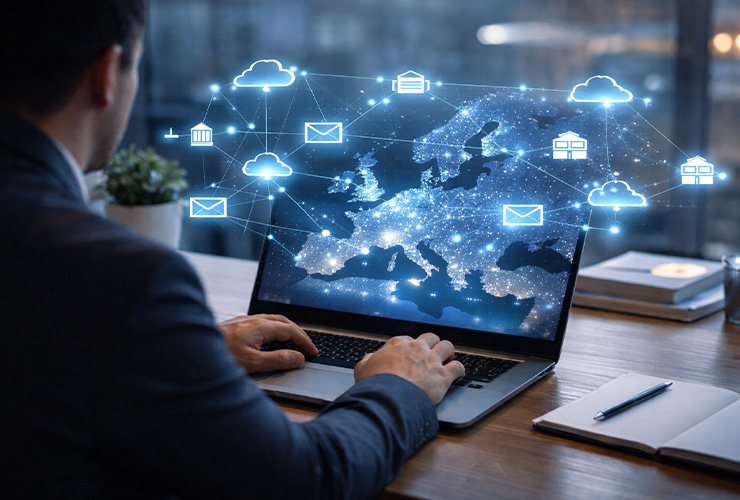
E-invoicing is rapidly becoming the standard for invoice exchange across Europe. While each country follows its own implementation path, the overall direction is clear: structured invoice data, digital exchange, and increased transparency for tax authorities. This blog provides a high-level overview of how e-invoices are exchanged across key European countries, and how Onventis supports these different models.

As e-invoicing becomes mandatory across Europe, many organizations face the same question: How do we connect to e-invoicing networks without adding complexity to our AP landscape? In this blog, we explain why an integrated Access Point approach is the easiest, most cost-effective, and most future-proof way to receive e-invoices.